


About Us
Welcome to Coast Package Material. Your trusted partner for various packaging products!
Contact UsContact Info
- Operation Center : 365 Hu Tai Road, Shanghai, China, 200070
- +86 18158186165
- info@coastpackage.com
Welcome to Coast Package Material. Your trusted partner for various packaging products!
Contact Us
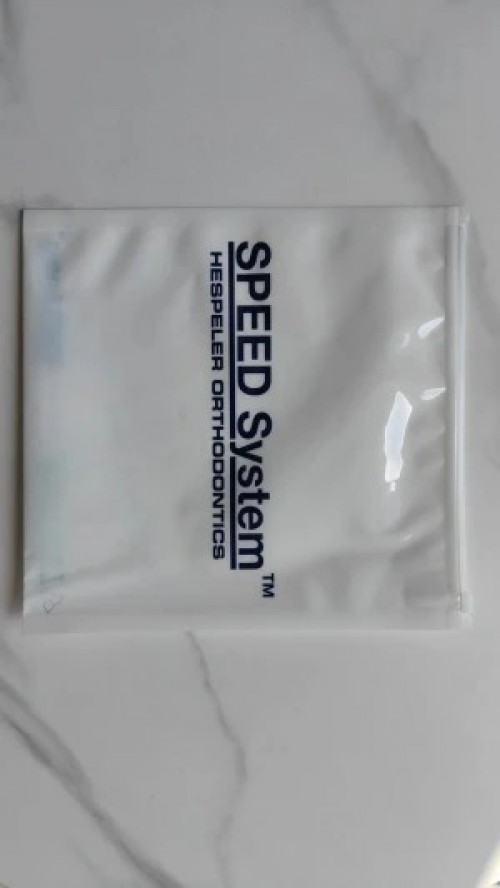
Flat pouches are one of those packaging formats that work well precisely because they don't try to do everything. They're not designed for shelf display or retail faceouts. They're designed to protect your product, ship efficiently, and cost less per unit than most alternatives. For brands that buy in volume, that combination is hard to beat.
At Coast Package, we supply wholesale flat pouches to businesses across food, cosmetics, pharma, pet care, and consumer goods. Whether you need plain stock bags, fully custom-printed runs, or specific material constructions for barrier or compliance requirements, we can work to your spec. Browse packaging formats.
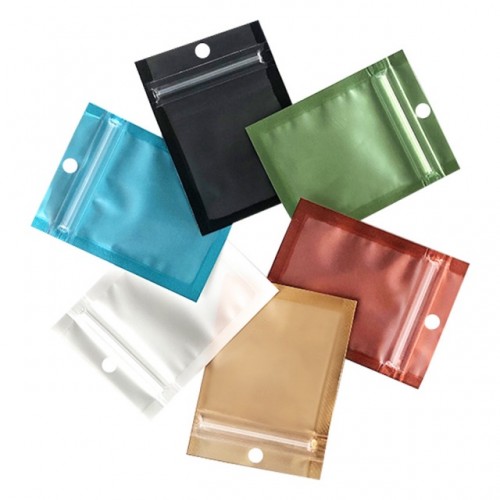
Flat pouches go by a few names depending on who you're talking to: lay-flat pouches, pillow pouches, 3-side seal bags. They're all the same basic format. The differences that actually matter are in the seal configuration, the material stack, and whether you need a zipper or a tear notch.
The standard option. Sealed on three sides, open on the top for filling. These work well for dry goods, powders, spice sachets, and anything that gets heat-sealed at the packing stage. The structure is simple, which is part of why the unit cost is lower than more complex formats.
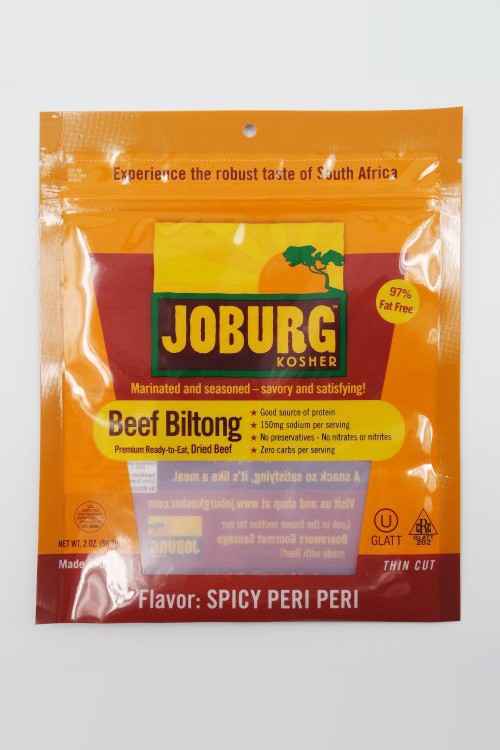
Add a resealable zipper and the same pouch becomes practical for products that get opened more than once. Common in snack packaging, coffee samples, pet treat trial packs, and cosmetic sachets. The zipper adds cost, but for the right product, it's worth it.
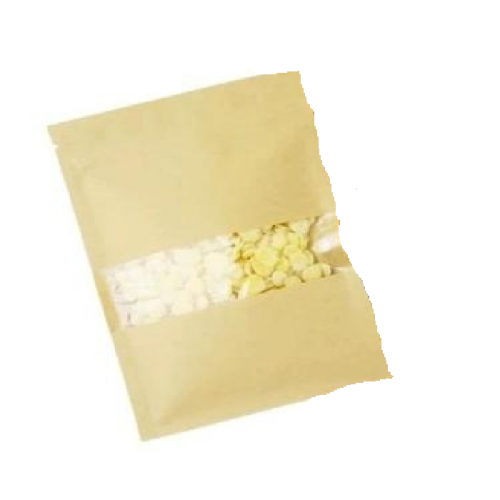
A clear window panel on one side lets buyers see the product without opening the pack. This tends to work well for food products where visual appeal at the point of sale matters, or for e-commerce listings where product photos matter.
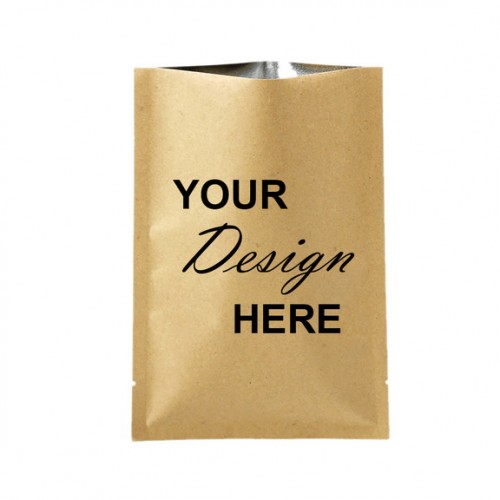
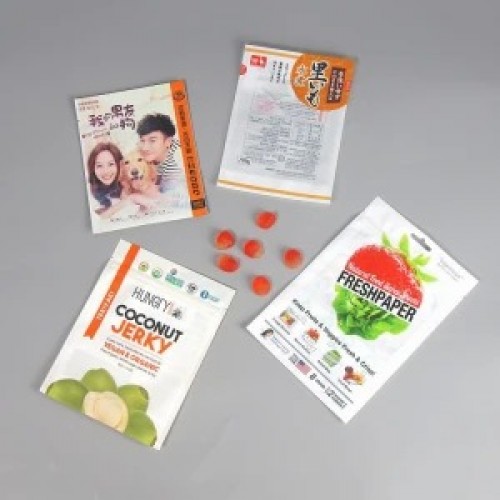
If you're selling under your own brand, we can print your logo, artwork, and product information directly onto the pouch film before it's formed. Full bleed, multiple colors, matte or gloss finish. More on printing options below.
Choosing the right film structure is more important than most buyers expect. The material determines barrier performance, shelf life, print quality, and whether the pouch qualifies as food-grade for your market.
Here's a practical breakdown:
BOPP (Biaxially Oriented Polypropylene): The go-to for cost-effective, high-clarity packaging. BOPP offers a good moisture barrier and is widely used for dry snacks, baked goods, and anything that doesn't need long-term oxygen protection. It has a low seal initiation temperature, which means faster throughput on filling lines.
PET (Polyester Film): More dimensionally stable than BOPP and easier to print on at high speeds. Common in laminated structures for condiments, coffee sachets, and cosmetic applications. Often used as the outer print layer in a multi-ply construction.
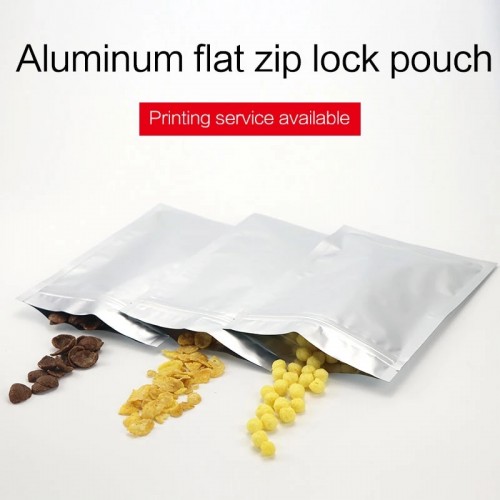
Aluminum Foil Laminates: The highest barrier option for oxygen and moisture. If you're packaging coffee, freeze-dried goods, or anything with a shelf life requirement beyond 12 months, foil laminate is the standard. It also blocks light, which matters for light-sensitive products.
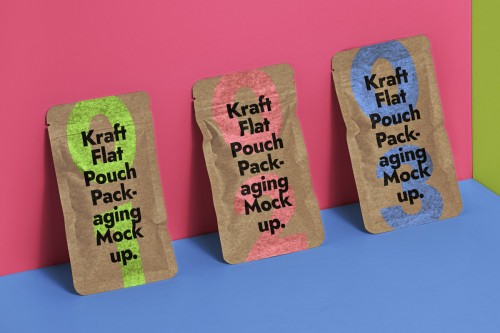
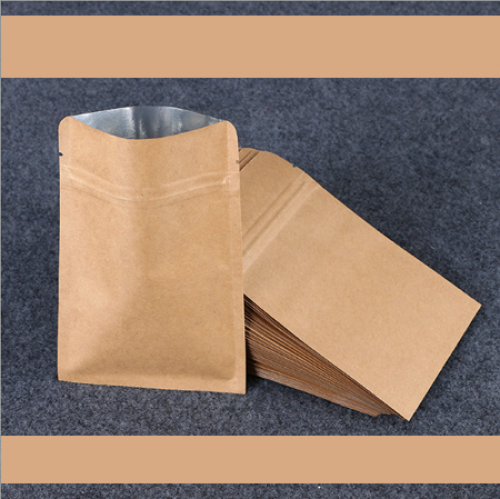
Kraft Paper Flat Pouches: Virgin kraft is food-grade for direct contact with dry goods. Kraft pouches work for products where the natural or artisanal look is part of the brand. Worth noting: recycled kraft doesn't meet food-contact standards without additional certification, so confirm the fiber source before specifying it for food applications.
Compostable and Recyclable Films: We offer eco-friendly film options for brands selling into markets where sustainability claims are part of the pitch. These typically use mono-material constructions or certified compostable laminates.
For most applications, the best-performing pouches use a laminated structure that combines two or three materials, for example PET as the outer print layer, VMPET (metalized PET) for barrier, and PE as the food-safe inner sealant layer. This kind of construction balances cost, performance, and print quality.
If you're buying packaging for food, pharmaceuticals, or cosmetics, your supplier's compliance documentation matters. Distributors and major retailers in the US and EU will ask for it.
The key standards to understand:
FDA 21 CFR: Covers approved food-contact substances and migration limits for packaging that touches food directly. This applies to the substrate, coatings, inks, and adhesives as a combined system, not each layer in isolation. Ask your supplier for migration test reports, not just a blanket "FDA compliant" statement.
GFSI Certifications (ISO 22000, FSSC 22000, SQF): The Global Food Safety Initiative sets the benchmark for food safety management systems. These certifications require third-party audits of raw material traceability, contamination prevention, and facility hygiene.
BPA-Free: Now a baseline expectation in most consumer-facing markets. Confirm this is tested and documented, not just assumed.
When requesting compliance documents from any supplier, ask for the certificate number, issuing laboratory, applicable regulation, and the numeric test results. A report that says "pass" without the underlying data carries limited value if a buyer or regulator asks questions later. Independent labs such as SGS and Intertek, both ISO/IEC 17025 accredited, are the standard for packaging compliance testing.
Printing Options for Custom Flat Pouches
If you want your branding on the pouch, you have two printing methods to consider, and the right choice depends mainly on your order volume and how often your artwork changes.
Digital Printing works without plates or cylinders. Your artwork goes directly from a design file onto the pouch film. There are no setup fees per color, which makes it practical for smaller runs and useful when you need to run multiple SKUs or seasonal variations without incurring plate costs on each. MOQs for digitally printed flat pouches typically start around 1,000 units.
Rotogravure Printing uses laser-engraved copper cylinders, one per color. The setup cost is higher upfront (roughly $120 to $200 per cylinder), but the per-unit cost drops significantly at volume. Rotogravure is accurate enough to hand-mix spot colors for exact brand matching, and those cylinders are reused on repeat orders, so you don't pay setup again unless you change the artwork. For runs starting at 10,000 units with a design you plan to keep for multiple seasons, rotogravure is the more economical choice long term.
A simple way to decide: if your order quantity is under 5,000 units or your artwork changes frequently, choose digital. If you're ordering 10,000 or more and the design is stable, rotogravure.
There are a few practical reasons flat pouches show up in so many wholesale and B2B orders.
Flat pouches use less material than stand-up pouches and have a simpler seal construction. That difference in material usage shows up in the price, especially at high volumes.
Flat pouches pack completely flat before filling, which maximizes how many units fit in a carton or on a pallet. For buyers shipping or warehousing large quantities, this reduces freight cost per unit in a way that adds up quickly.
The 3-side seal format runs efficiently on most form-fill-seal lines. For co-packers and manufacturers working at high throughput, flat pouches tend to cause fewer line complications than more complex formats.
Whether you're sampling a new product in small runs or running a full production order for a major account, flat pouches work at both ends. Digital printing makes low-MOQ custom runs practical; rotogravure makes high-volume orders economical.
The global flexible packaging market was valued at $293.9 billion in 2025 and is growing at roughly 5.3% per year, with pouches as the fastest-growing format type. Flat pouches account for a significant share of that demand, particularly in food, e-commerce, and personal care. There is a practical reason for that: they get the job done at a cost that works for both the brand and the end buyer.
It depends on whether you need plain or custom-printed pouches. Plain stock pouches can often be ordered in smaller quantities. For custom-printed runs, digital printing typically starts around 1,000 units per SKU and rotogravure at 10,000 units. Contact us with your spec, and we can confirm the exact MOQ for your size and material.
Yes. Our food-grade flat pouches use materials that meet FDA 21 CFR food contact substance standards. If you need specific compliance documentation for your market, including migration test reports or certification details, request these when you submit your inquiry.
Flat pouches are available in a range of sizes, from small sample sachets suitable for single-serve tea or cosmetic samples to larger formats for bulk dry goods. We can also produce custom dimensions to match your product fill weight and packaging line requirements.
Yes. We produce custom-printed flat pouches using both digital and rotogravure printing. You can include your logo, full-color artwork, product information, and any regulatory text required for your market. Send us your artwork files when you enquire, and we'll confirm print specifications.
Lead times vary by order size and printing method. Standard production for digital-printed pouches is generally faster than rotogravure, which requires cylinder production. Contact us for current lead time estimates based on your specific requirements.
Yes. See our compostable packaging range for eco-friendly alternatives that meet sustainability requirements in the EU and other regulated markets.
If you know your product, your fill weight, and roughly how many units you need, that's enough to start. Send us those details through the inquiry form on our contact us page, and we'll get back to you with material options, pricing, and lead times specific to your order.