
Blog

By The Most:

Oct 7,2026

Top 10 Reasons to Choose Stand Up Pouches for Your Business

Stand-up pouches started in food, but you now see them holding protein powder, pet treats, laundry refills, sauces, seeds, and small hardware. If you are weighing a pouch against a jar, can, tub, or carton, the decision comes down to a handful of practical points. Here are ten, along with situations where a pouch isn't the right call.

1. They Stand Up and Display Without Extra Hardware

A stand-up pouch has a gusset at the base. Once filled, it opens into a flat footprint and stays upright on a shelf. Add a hang hole or euro slot at the top, and the same pouch works on a peg hook too. The whole front panel faces the shopper, which matters when your product sits between several competitors at eye level.

2. You Use Less Material Per Unit

A pouch is a thin laminated film. A jar is glass or thick plastic plus a lid. In most cases, the pouch weighs far less than the rigid container holding the same amount of product. The exact difference depends on size and structure, so do not rely on a generic percentage. Ask your supplier for the pouch's gram weight, weigh your current container, and compare cost and weight per unit of product. At volume, that comparison often favors the pouch.

3. They Are Cheaper to Store and Ship Before Filling

Empty pouches arrive flat in cartons. A single carton of pouches can replace several cartons of empty jars or tubs, freeing warehouse space and cutting inbound freight. The filled product still weighs what it weighs, so the freight savings come from the packaging itself, not the contents.

4. You Can Match the Barrier to the Product

This is where pouches are more flexible than most people expect. The film is a laminate, and the layers decide how well it blocks oxygen, moisture, and light.

  • Clear PET/PE: fine for products with a short shelf life or low sensitivity, and it lets shoppers see the contents.
  • Metalized film (such as VMPET): a moderate barrier at a moderate cost.
  • Aluminum foil layer: very low oxygen and moisture transmission, used for coffee, supplements, and other sensitive products.
  • Kraft paper outer layer: a natural look, usually paired with a barrier liner inside.

Barrier performance is reported as oxygen transmission rate (OTR) and water vapor transmission rate (WVTR). Ask for both numbers for the exact structure you plan to buy. Coffee roasters should also ask about one-way degassing valves.

5. Resealable Closures Cut Waste at Home

Zippers, press-to-close strips, and sliders let customers reseal the pouch after opening, helping the product stay fresh and making the pack easy to reuse for storage. Tear notches or laser scores give a clean first opening. For liquids and sauces, a spout fitting turns the pouch into something closer to a squeezable bottle. These features cost a little more per unit, so match them to how your customer actually uses the product.

6. There is a Lot of Printable Space

You can print the front, back, and often the gusset. Finishes include gloss, matte, soft-touch, and spot gloss, and a clear window can show the product inside. The printing method affects cost:

  • Digital printing suits short runs and brands with several flavors or sizes, since you avoid tooling for each design.
  • Rotogravure needs engraved cylinders, which adds setup cost, but it usually gives a lower per-unit price on large, repeat orders.

If you are still testing a product, digital is usually the safer start.

7. One Format Covers Many Products and Processes

Pouches can be built for dry goods, powders, liquids, frozen food, and hot-filled products. Retort pouches are made to survive heat sterilization at around 121 degrees Celsius, which is why you see them used for ready meals and tuna. Different laminates handle each condition, so tell your supplier how the product is filled, sealed, heated, and stored before choosing a structure.

8. The Sustainability Picture is Better Than Rigid Packaging in Some Ways, and Worse in Others

Less material generally means a smaller footprint for production and transport. The catch is end of life. Multi-layer laminates are usually not accepted in curbside recycling. If recyclability matters to your customers or your market, look at these options:

  • Mono-material PE pouches, designed to be collected through store drop-off programs where those exist.
  • Compostable structures, which should come with certification to a recognized standard such as EN 13432 or ASTM D6400. Keep in mind that these need industrial composting, not a backyard bin.
  • Refill pouches that replace a new rigid bottle with each purchase.

Packaging producer responsibility laws are also spreading, including in several US states and in the EU. Check the current rules for every market you sell in, and ask suppliers for certificates rather than accepting a general "eco-friendly" label.

9. Compliance Options Exist for Regulated Products

For food contact, materials need to meet the rules of the market where you sell, such as FDA food contact regulations in the US or Regulation (EC) No 1935/2004 in the EU. Ask your supplier for a declaration of compliance for the specific film. For products that require child-resistant packaging, such as some cannabis and pharmaceutical products depending on jurisdiction, the pouch and closure must be tested against the relevant protocol. In the US, that is 16 CFR 1700.20, and ISO 8317 applies to reclosable packages internationally. A pouch marketed as child-resistant should come with test documentation.

10. They Work for Both Small Batches and Automated Lines

A startup can fill pouches by hand and close them with an impulse heat sealer. A larger operation can use premade pouch filling machines that open, fill, and seal at speed. That means you can begin with a small run and move to automation later without redesigning your package format. Whichever route you take, confirm seal strength. ASTM F88 is the standard test method for seal strength of flexible barrier materials, and a good supplier can share results.

When a Stand-up Pouch is Not the Best Choice

  • Fragile products such as loose chips or crackers can break inside a soft pouch unless the pack is inflated with nitrogen or protected by a carton.
  • Very heavy products need reinforced laminates and stronger seals, and may be better in a rigid container.
  • Sharp items can puncture thin films.
  • Premium gift positioning sometimes calls for a rigid box or tin.
  • Shipping filled pouches usually still needs a shipper carton, because pouches do not stack or resist crushing as well as jars.

What to Check Before You Order

  1. Ask for samples in the exact structure and size you plan to buy.
  2. Fill them on your real line, with your real product.
  3. Run a shelf-life test that reflects your storage and shipping conditions.
  4. Drop and transport test filled, cased pouches.
  5. Request compliance documents, barrier data, and seal strength results in writing.

Frequently Asked Questions

Are stand-up pouches food safe?

They can be, when made from food-contact-approved materials. Ask for compliance documentation for the specific film and ink system.

How long will my product stay fresh in a pouch?

It depends on the barrier layers, how well the pouch is sealed, and how sensitive your product is to oxygen and moisture. Only a shelf-life test with your product can give a reliable answer.

Are stand-up pouches recyclable?

Some are, mainly mono-material designs collected through drop-off programs. Most standard laminated pouches are not accepted in curbside recycling.

Conclusion

Stand-up pouches are worth choosing when you want strong shelf presence, controlled barrier protection, lower packaging weight, and the flexibility to scale from a small run to a filling line. They are less suited to fragile, very heavy, or premium rigid-pack products. Start with samples, test with your own product, and pick the film structure based on data rather than assumptions.
Popular Blogs

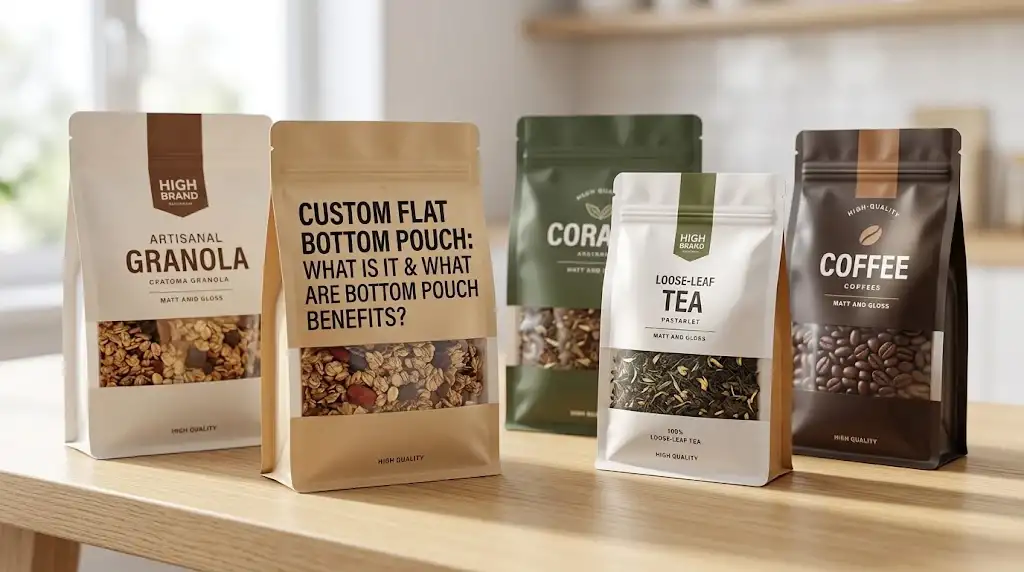
Custom Flat Bottom Pouch: What Is It & What Are Bottom Pouch Benefits?

Flat bottom pouches are a flexible packaging format that combines the convenience of a pouch with the stable, structured look of a box. Their rectangular base lets the filled package stand upright, while side gussets add volume and panel space for branding and product information. They are also commonly called block bottom pouches, box pouches, or flat bottom bags. For manufacturers, food brands, coffee companies, pet food suppliers, and other businesses evaluating flexible packaging, the main question is not simply whether a flat bottom pouch looks attractive. The more important question is whether its construction, material, barrier level, size, closure, and other features match the product and packaging requirements. What Is a Flat Bottom Pouch? A flat bottom pouch is a flexible bag with a structured rectangular base and side gussets. When filled, these components create a box-like shape that lets the package stand upright on a shelf or other flat surface. Coast Package describes flat bottom and block bottom pouches as the same general packaging format, with available display space across the front, back, side gussets, and bottom. This construction gives the pouch a more defined footprint than a conventional flexible bag. It can also provide more usable surface area for printed branding, product information, and other packaging graphics. Don't confuse the flat bottom with a simple flat pouch. A flat pouch has no structured bottom and is typically designed for lightweight or single-use applications, while a flat bottom pouch is designed to form a stable base when filled. How Does a Flat Bottom Pouch Differ From a Stand-Up Pouch? Both formats are designed to stand upright, but they achieve this through different constructions. A stand-up pouch generally uses a bottom gusset that expands as it fills. A flat bottom pouch uses a rectangular base combined with side gussets, giving it a more structured, box-like footprint. Consideration Flat Bottom Pouch Stand-Up Pouch Base construction Rectangular flat base with side gussets Bottom gusset Overall appearance Structured, box-like Flexible and rounded Shelf stability Strong upright presentation Good, depending on product and fill Branding area Front, back, side gussets, and base Mainly front and back panels Manufacturing complexity Generally more complex Generally simpler Cost Can be higher than stand-up pouches Often more economical Typical applications Coffee, pet food, premium dry foods, grains Snacks, powders, tea, samples, and many dry goods There is no universal winner. Stand-up pouches can be a practical choice when lower cost and flexible packaging are priorities. At the same time, flat bottom pouches can be more appropriate when shelf stability, larger fill volumes, structured presentation, or multiple printable panels are important. Key Benefits of Flat Bottom Pouches 1. Stable Shelf Presentation The rectangular base gives the filled pouch a stable footprint and keeps it upright. This is especially useful for products displayed individually on retail shelves. The structured shape also gives the package a more box-like appearance without requiring a rigid container. Coast Package positions block bottom pouches as a flexible alternative to conventional boxes for applications such as coffee and pet food. 2. More Space for Branding and Product Information A flat bottom pouch can provide several usable surfaces for printing. Depending on the construction, brands can use the front and back panels as well as the side gussets and bottom area for packaging information and visual elements. That extra surface area can help products that need more than a simple front-facing label. Brands can allocate different panels to product descriptions, preparation instructions, nutritional information, branding, barcodes, or other required information. The extra panel space is a branding opportunity, but it should not be treated as an automatic guarantee of higher sales. Packaging design, product positioning, pricing, distribution, and the overall customer experience also influence commercial performance. 3. Flexible Barrier Protection One major advantage of flexible packaging is the ability to engineer multilayer film structures for specific product requirements. Different layers can provide functions such as printability, mechanical strength, oxygen and moisture barrier, and heat sealing. Coast Package lists several material options for bottom pouches, including aluminum foil laminates, kraft-based structures, metalized films, and other customized constructions. The key point is that barrier performance comes from the selected material structure, not simply the flat-bottom shape. A product sensitive to oxygen, moisture, light, or aroma may require a different laminate than a less sensitive dry product. For example, aluminum foil blocks light, oxygen, moisture, and bacteria, which is why it is widely used in food and pharmaceutical packaging. 4. Customizable Closures and Features Flat bottom pouches can be customized with functional features based on the product and intended user experience. Available options may include: Resealable zippers Pull-tab or slider zippers One-way degassing valves Tear notches Die-cut handles Hanger holes Clear windows Laser scoring Glossy or matte finishes Coast Package currently lists these and other customization options across its flat and block bottom pouch products. For coffee packaging, a one-way degassing valve can be particularly important. Freshly roasted coffee releases carbon dioxide after roasting, and a suitable valve lets gas escape while helping limit oxygen from entering the package. 5. Suitable for Multiple Product Categories Flat bottom pouches are not limited to one type of product. Current Coast Package applications include coffee, coffee beans, pet food, powders, snacks, tea, grains, and other food and non-food products. The right pouch construction depends on the product's physical and protection requirements, not the product category alone. What Products Are Commonly Packed in Flat Bottom Pouches? Coffee Coffee is one of the strongest applications for flat bottom packaging. The upright shape can create a premium shelf presentation, while high-barrier structures and one-way degassing valves can be specified for roasted coffee products. Coast Package currently offers flat-bottom coffee packaging using structures such as PET/AL/PE, with options including resealable zippers and one-way degassing valves. Pet Food Dry pet food and treats can benefit from the stable base and larger volume of a block-bottom format. Coast lists pet food and kibble among its flat-bottom applications. For heavier fills, evaluate material structure, seal strength, dimensions, and bottom construction together rather than selecting a pouch based only on appearance. Snacks and Dry Foods Snacks, grains, nuts, dried foods, and similar products can be packaged in flexible bottom pouches. The required barrier level depends on the product's sensitivity to moisture, oxygen, light, and other environmental factors. Powders and Dry Ingredients Powders and dry ingredients can also be packed in flat bottom pouches. Product density and fill weight become particularly important when selecting pouch dimensions and construction because the package must support the filled product while maintaining reliable seals. Tea and Other Specialty Products Tea, herbs, spices, and specialty dry foods can use flat bottom formats when product protection and shelf presentation matter. Select the material based on the product's barrier and shelf-life requirements. How to Choose the Right Flat Bottom Pouch Start by choosing a pouch based on the product, not the artwork. 1. Determine the Fill Weight and Volume Start with the product's actual quantity and density. A pouch intended for 250 g of a dense powder may require different dimensions from a pouch holding 250 g of a lightweight snack. Manufacturers should test the actual product fill rather than relying only on estimated dimensions or a digital mockup. 2. Define the Required Barrier Consider whether the product needs protection from: Oxygen Moisture Light Aroma loss External contamination The selected laminate should provide the required performance while avoiding unnecessary material complexity. 3. Select the Closure Consider whether the package needs a standard heat seal, zipper, slider, tear notch, spout, or another opening system. For products intended to be opened and closed multiple times, a resealable zipper may improve convenience. For coffee, a one-way degassing valve may be necessary depending on the product and filling requirements. 4. Consider Printing and Finishing Decide how much information needs to appear on the package and how to distribute the printed areas across the panels. Options can include matte or glossy finishes, clear windows, custom graphics, and multiple printing processes. Coast Package currently offers custom printing and several surface and accessory options for its bottom pouch products. 5. Evaluate MOQ and Production Requirements For custom packaging, discuss minimum order quantities, sampling, production schedules, artwork requirements, and shipping arrangements before placing an order. Coast Package currently publishes custom bottom pouch specifications that include custom sizing and materials, printing options, sample availability, and production lead-time information. Because these commercial details can change, buyers should confirm current terms when requesting a quotation. Are Flat Bottom Pouches More Cost-Effective? The answer depends on what you're comparing the pouch to. Flexible packaging can use relatively small amounts of material and weighs less than many rigid packaging formats. Flexible Packaging Association information also highlights the resource efficiency and lightweight nature of flexible films. However, a flat bottom pouch should not automatically be described as cheaper than every other pouch format. Its more structured construction can make it more complex and more expensive to produce than a stand-up pouch. Total packaging cost can depend on: Material structure Pouch dimensions Fill volume Printing requirements Order quantity Closure type Degassing valve Surface finish Tooling and production requirements Shipping The better question is whether the additional cost is justified by the required shelf presentation, functionality, product protection, and packaging performance. Sustainability Considerations Flat bottom pouches can be produced using different material structures, including recyclable or compostable options. Coast Package currently offers mono-material and compostable packaging options. However, calling a pouch simply "eco-friendly" is too broad. Sustainability depends on the complete packaging structure, product protection requirements, local collection and recycling infrastructure, and end-of-life pathway. The Flexible Packaging Association emphasizes evaluating sustainability across the packaging life cycle rather than judging it by a single material or characteristic. For B2B buyers, a better approach is to ask the supplier exactly what materials are being used, whether the structure is designed for a particular recycling or composting system, and what documentation is available for the target market. Questions to Ask a Flat Bottom Pouch Supplier Before ordering custom flat bottom pouches, ask the supplier: Which material structure is appropriate for my product? What pouch dimensions do you recommend for my fill weight? What oxygen and moisture barrier performance is available? Do you offer recyclable or compostable structures? What zipper, valve, tear notch, or handle options do you offer? What printing processes and finishes can you provide? Can you supply production samples before a larger order? What is the MOQ for my selected size and material? What quality-control testing do you perform during production? What are the current production and shipping lead times? Getting these answers before production can reduce the risk of selecting a pouch that looks right but does not perform properly for the product. Frequently Asked Questions What is a flat bottom pouch? A flat bottom pouch is a flexible package with a rectangular base and side gussets that create a stable, box-like shape when filled. It is also commonly called a block bottom pouch or box pouch. What is the difference between a flat bottom pouch and a stand-up pouch? A flat bottom pouch uses a more structured rectangular base and side gussets, while a stand-up pouch typically relies on an expandable bottom gusset. Flat bottom pouches generally look more structured and can offer more printable surface area. Are flat bottom pouches good for coffee? Yes. Flat bottom pouches are widely used for coffee, and specialized versions can incorporate high-barrier material structures and one-way degassing valves. Coast Package currently lists coffee and coffee beans among its applications for block-bottom packaging. Are flat bottom pouches recyclable? Some flat bottom pouches can be designed using recyclable material structures, but recyclability depends on the complete pouch construction and the recycling infrastructure available in the intended market. A supplier should confirm the specific structure and applicable end-of-life route. Can flat bottom pouches have zippers? Yes. Flat bottom pouches can be produced with different resealable zipper configurations, including pull-tab and slider options, depending on the product and package design. Can flat bottom pouches have a degassing valve? Yes. One-way degassing valves are available for applications such as roasted coffee, where carbon dioxide needs to escape after roasting. Coast Package currently offers this feature on applicable bottom pouch products. Are flat bottom pouches more expensive than stand-up pouches? They can be. Flat bottom pouches generally involve a more complex construction than stand-up pouches, although the final price depends on the material, size, printing, accessories, order quantity, and other specifications. Conclusion Flat bottom pouches offer a practical combination of flexible packaging, upright stability, structured presentation, customizable barrier materials, and multiple closure and accessory options. Their strongest applications include coffee, pet food, snacks, powders, tea, grains, and other products where shelf presentation and product protection need to work together. Select the right pouch based on the product, fill weight, barrier requirements, closure, printing needs, order quantity, and distribution conditions. A flat bottom pouch isn't automatically the best option for every product. Still, when you need a structured, shelf-ready format, it can offer advantages a conventional flexible pouch may not. For businesses sourcing custom flat bottom pouches, working with a supplier that can match the material structure, dimensions, barrier requirements, printing, and functional features to the product is key to consistent packaging performance.

What is the Difference Between a Flat Pouch and a Stand-Up Pouch?

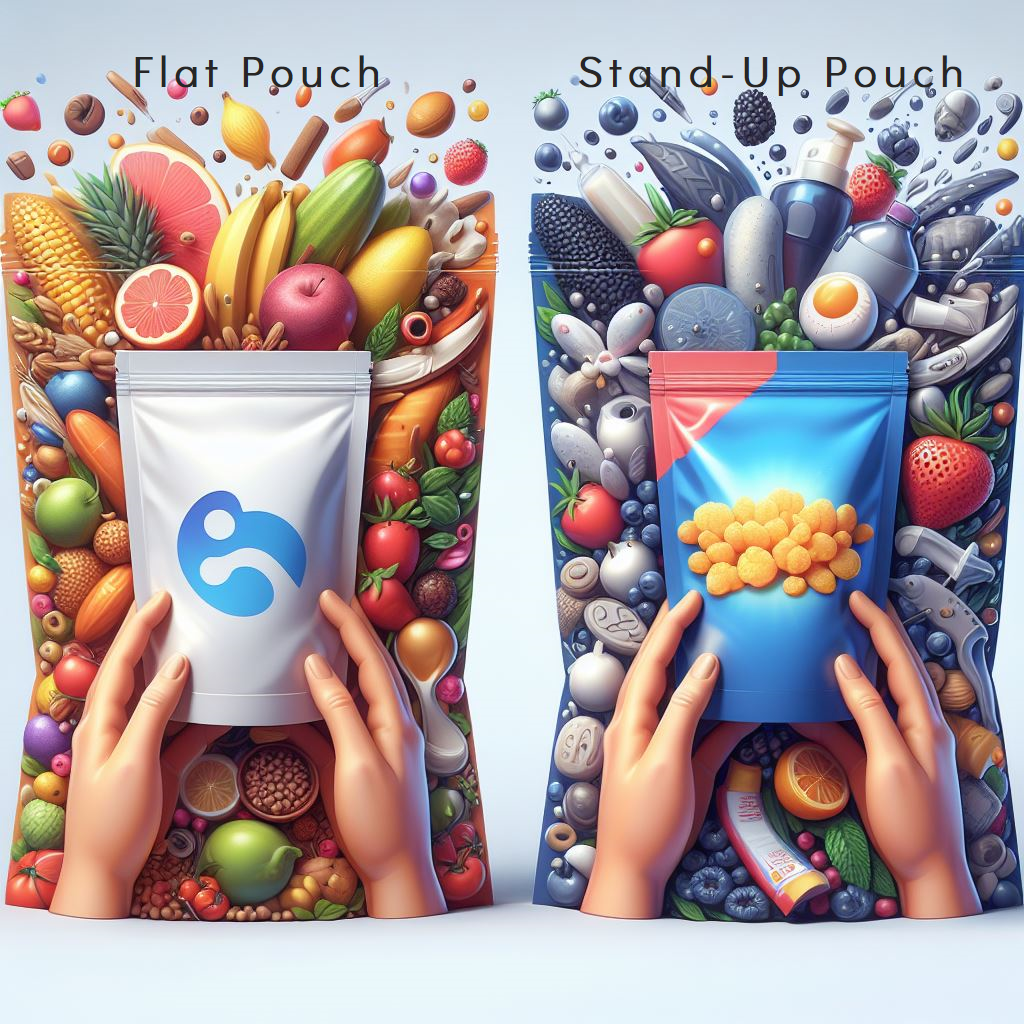
In flexible packaging, understanding the nuances between different types is crucial for businesses aiming to make informed choices. Two popular contenders in this arena are the flat and stand-up pouches. Let's delve into their characteristics, applications, and key differentiators. Flat Pouch A flat pouch is a versatile packaging solution known for its simplicity and practicality. Typically featuring a flat, unstructured design provides a sleek and space-efficient option for various products. The lack of a gusset or base fold distinguishes flat pouches, making them ideal for lightweight items or those with limited pourability. Key Features of Flat Pouches 1. Sleek Design: Flat pouches offer a clean and minimalist appearance, making them suitable for a wide array of products. 2. Cost-Effective: The straightforward design of flat pouches often translates into a cost-effective packaging solution, especially for budget-conscious businesses. 3. Space Efficiency: Their flat nature ensures efficient use of shelf space, making them an excellent choice for retail environments. Applications of Flat Pouches 1. Snack packaging 2. Sample packs 3. Single-use items 4. Apparel accessories Read this article: Right Buyer's Guide For Stand-Up Pouch Stand-Up Pouch In contrast, a stand-up pouch boasts a unique design that includes a gusset or base fold. This distinctive feature allows the pouch to stand upright on store shelves, offering better visibility and branding opportunities. Stand-up pouches are favored for their stability and versatility, making them suitable for various industries. Key Features of Stand-Up Pouches 1. Self-Supporting: The gusseted base enables stand-up pouches to maintain shape, providing a stable and visually appealing display. 2. Versatility: Stand-up pouches come in various styles, including spouted, zippered, and resealable options, catering to a diverse range of products. 3. Branding Opportunities: The upright position of these pouches allows for greater visibility of branding elements, enhancing product appeal. Applications of Stand-Up Pouches 1. Food packaging (snacks, coffee, pet food) 2. Liquid products (sauces, beverages) 3. Personal care items 4. Pharmaceuticals Distinguishing Factors 1. Structure: The primary distinction lies in the structure, with flat pouches lacking a gusset or base fold, while stand-up pouches feature a self-supporting design. 2. Appearance: Flat pouches exude simplicity, while stand-up pouches offer a more dynamic and visually striking presence. In conclusion, choosing between a flat pouch and a stand-up pouch hinge on product characteristics, shelf display requirements, and branding goals. Understanding these differences empowers businesses to select the most suitable packaging solution for their unique needs.

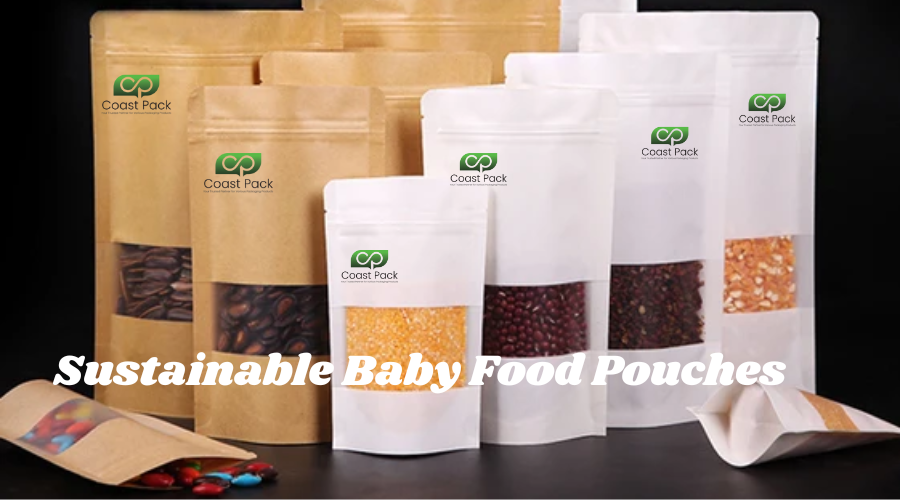
Eco-Friendly Baby Food Pouches: Sustainable Options for Conscious Parents

As a conscious parent, providing the best for your baby while being mindful of the environment is a top priority. One area where you can make a significant impact is through your choice of baby food pouches. Eco-friendly baby food packaging are an excellent option for those looking to reduce their environmental footprint without compromising on quality or convenience. Understanding the Importance of Eco-Friendly Baby Food Pouches Eco-friendly baby food pouches offer several benefits: 1. Sustainable Materials: These pouches are made from biodegradable or recyclable materials. This means less plastic waste ends up in landfills and oceans, contributing to a healthier planet. 2. Reduced Carbon Footprint: Sustainable food pouches often come from manufacturers who prioritize green practices, such as using renewable energy sources, reducing water usage, and minimizing carbon emissions during production. 3. Safety for Babies: Eco-friendly pouches are free from harmful chemicals like BPA, phthalates, and PVC, ensuring that your baby’s food is as safe and pure as possible. 4. Convenient and Portable: Just like conventional baby food pouches, eco-friendly options are easy to carry, store, and serve, making them perfect for busy parents on the go. Choosing the Right Eco-Friendly Baby Food Pouches When selecting sustainable food pouches, consider the following factors: • Material: Look for pouches made from plant-based plastics, recycled materials, or those that are fully compostable. • Brand Practices: Research brands to understand their commitment to sustainability. Brands that are transparent about their environmental impact and efforts to reduce it are typically more trustworthy. • Certifications: Check for certifications such as USDA Organic, Non-GMO Project Verified, or other eco-friendly endorsements. Top Brands Offering Eco-Friendly Baby Food Packaging Several brands stand out in the market for their commitment to sustainability: Coast Package Known for their innovative packaging solutions, Coast Package offers various types of food pouches like Stand Up Pouch, Block Bottom Pouch, Flat Pouch, Compostable Packaging, and Tote Bags that are not only eco-friendly but also they offering customizable design, stylish and top-rated pouches. Their pouches are designed to reduce environmental impact while keeping your baby’s food fresh and nutritious. Coast Package is dedicated to sustainable manufacturing practices and actively works to minimize waste throughout their production process. Happy Family Organics This brand offers a range of organic baby food in recyclable pouches. They are committed to sustainable farming and packaging practices, using renewable energy sources and reducing their carbon footprint. Happy Family Organics also participates in the TerraCycle recycling program, making it easy for parents to recycle used pouches. Plum Organics Plum Organics uses pouches that are part of the TerraCycle recycling program, ensuring that used pouches are recycled and kept out of landfills. They prioritize organic ingredients and sustainable farming practices, providing parents with healthy and eco-friendly options for their babies. Related: Eco-Friendly Stand-up Pouch Product Packaging Solving Common Problems for Conscious Parents Compostable baby food pouches address several common concerns: 1. Environmental Impact: Traditional baby food pouches contribute to plastic waste, but eco-friendly options help reduce this impact. By choosing sustainable pouches, parents can feel good about their contribution to a healthier planet. 2. Chemical Safety: Parents often worry about harmful chemicals in baby products. Eco-friendly pouches are made from safe materials, free from BPA, phthalates, and PVC, providing peace of mind. 3. Convenience: Busy parents need convenient options for feeding their babies. Eco-friendly pouches are just as portable and easy to use as conventional pouches, making them a practical choice for on-the-go families. 4. Cost-Effectiveness: While some eco-friendly options may be more expensive upfront, the long-term benefits of reducing waste and supporting sustainable practices can outweigh the initial cost. Additionally, buying in bulk baby food pouches or participating in recycling programs can offer cost savings. Expert Tips for Consicous Parents • Recycle Properly: Make sure to recycle used pouches correctly. Many brands offer mail-in programs or participate in recycling initiatives like TerraCycle. • Buy in Bulk: Purchasing baby food pouches in bulk reduces packaging waste and can save money. • DIY: Consider making your own baby food and using reusable pouches. This gives you control over ingredients and further reduces waste. By choosing eco-friendly baby food pouches, you’re not only providing your little one with nutritious meals but also contributing to a healthier planet. Embrace these sustainable options and set a positive example for future generations. Conclusion Compostable baby food pouches are a smart choice for parents who want to make environmentally responsible decisions. With options like Coast Package, Happy Family Organics, and Plum Organics, you can ensure that your baby gets the best nutrition while minimizing your environmental impact. By understanding the benefits and taking steps to choose and use these pouches effectively, you can solve common parenting problems and contribute to a sustainable future.

Get In Touch

captcha

Leave Your Comments